

MRI claustrophobia, the intense fear of being enclosed in the narrow MRI scanner, affects thousands of patients worldwide. This fear can be so overwhelming that some avoid or delay essential scans, putting their health at risk. Magnetic Resonance Imaging (MRI) has become one of the most important tools in modern medicine, helping doctors detect conditions ranging from brain injuries to spinal disorders with remarkable accuracy. However, for many people, undergoing this procedure is not just about lying still in a machine.
Table of Contents
In this article, we will explore the definition of MRI claustrophobia, its causes, symptoms, challenges, and practical solutions that can help patients manage this anxiety.
What is MRI Claustrophobia?
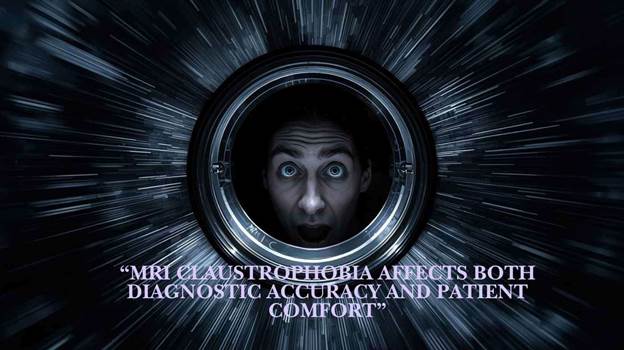
MRI claustrophobia refers to the fear or anxiety patients feel when placed inside an MRI scanner, a large machine with a narrow tunnel-like structure. The enclosed space, combined with loud noises and the requirement to remain still, can trigger panic in individuals who already struggle with claustrophobia.
Although not everyone experiences this fear, studies estimate that up to 13% of patients refuse MRI scans because of claustrophobia. Others may endure severe stress, sweating, trembling, or even panic attacks during the procedure. Recognizing this fear as a legitimate medical barrier is essential for healthcare providers and patients alike.
Historical Context and Growing Awareness
When MRIs were first introduced in the late 20th century, little attention was given to patient comfort. Early machines were long, narrow, and noisy, creating the perfect environment for MRI claustrophobia to develop. Over time, as more patients expressed fear and even refused scans, medical researchers and device manufacturers began addressing the issue.
Today, newer MRI models, such as open MRI scanners, have been designed to reduce the feeling of confinement. Increased awareness has also encouraged hospitals to train staff in handling patients with claustrophobic tendencies. This shift highlights how medical technology must evolve not only in accuracy but also in patient experience.
Causes and Triggers of MRI Claustrophobia
The fear linked to MRI claustrophobia is usually triggered by a combination of environmental and psychological factors:
- Enclosed tunnel-like design of the machine
- Loud knocking and buzzing noises during scanning
- Requirement to stay still for long periods
- Fear of losing control or not being able to escape
- Pre-existing claustrophobia or anxiety disorders
Patients with past traumatic experiences or panic disorders are often more prone to intense reactions.
Symptoms of MRI Claustrophobia
Recognizing the symptoms of MRI claustrophobia is critical to offering support. Common responses include:
- Sweating and rapid heartbeat
- Shortness of breath or hyperventilation
- Muscle tension or trembling
- Dizziness or nausea
- Full-blown panic attacks in extreme cases
These symptoms often make it impossible to complete the scan, leading to canceled or rescheduled appointments.
Why Addressing MRI Claustrophobia Matters
Ignoring MRI claustrophobia has serious consequences. An MRI scan is often ordered to diagnose critical health conditions, including tumors, multiple sclerosis, and spinal injuries. Delays or refusals mean patients may miss early detection and treatment opportunities.
Addressing this fear not only improves patient experience but also ensures accurate diagnoses. Hospitals that invest in patient-centered solutions report higher completion rates and greater trust in medical care.
Practical Solutions for Managing MRI Claustrophobia
Fortunately, several effective strategies can help patients cope with MRI claustrophobia:
Technological Solutions
- Open MRI scanners: These machines offer a wider design, reducing the sense of being trapped.
- Short-bore MRI: Machines that are shorter in length help minimize confinement.
- Noise-reducing technology: Modern MRIs come with quieter operations, lowering stress levels.
Psychological Strategies
- Cognitive Behavioral Therapy (CBT): Helps patients reframe fearful thoughts.
- Relaxation techniques: Breathing exercises, meditation, or visualization reduce anxiety.
- Pre-scan counseling: Educating patients about what to expect often reduces fear.
Medical Interventions
- Sedatives or anti-anxiety medication: Prescribed when other strategies are insufficient.
- Use of anesthesia: In rare cases, anesthesia is used for patients who cannot otherwise tolerate the scan.
Real-World Examples of Overcoming MRI Claustrophobia
Hospitals worldwide have reported success in managing MRI claustrophobia with combined approaches. For example, one hospital in the U.S. introduced patient preparation sessions with therapists, reducing incomplete scans by 40%. Similarly, clinics offering open MRI scans have seen an increase in patient satisfaction among those with claustrophobic tendencies.
Personal stories also highlight progress. Many patients who once avoided MRIs have completed them successfully after practicing relaxation techniques or using mild sedation. These examples prove that while MRI claustrophobia is real and challenging, it can be managed effectively.
Challenges That Still Remain
Despite advancements, barriers remain in fully addressing MRI claustrophobia:
- Limited availability of open MRI machines in many regions
- Insurance restrictions preventing access to alternative MRI methods
- Lack of awareness among patients about available solutions
- Stigma around admitting fears, leading patients to silently endure distress
Healthcare systems must continue prioritizing patient comfort and providing accessible options.
Conclusion
MRI claustrophobia is a genuine challenge faced by many patients, often making essential medical scans a source of extreme fear. While it may stem from enclosed spaces, loud noises, or underlying anxiety, modern medicine offers solutions ranging from open MRI machines to relaxation therapies and medical interventions. Recognizing and addressing this fear ensures patients do not delay critical diagnoses and treatments. By combining technology, psychology, and empathy, healthcare providers can transform a frightening experience into one that feels manageable and safe.