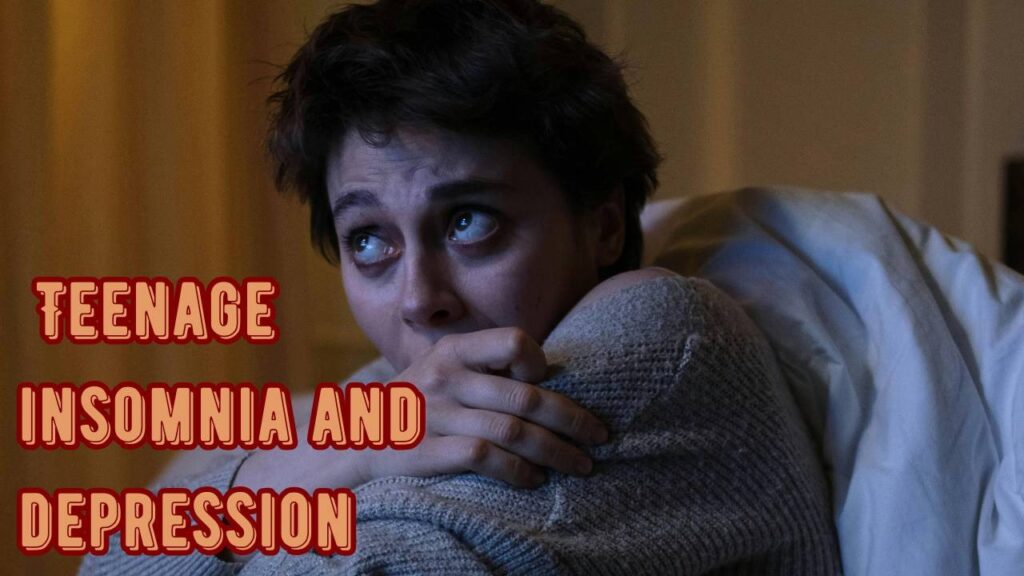
Teenage insomnia and depression are not just two separate problems that happen to appear at the same time. They are deeply intertwined conditions that feed into each other in a vicious cycle. When a teenager cannot sleep, their brain’s ability to regulate mood collapses. And when depression sets in, it makes restful sleep nearly impossible.
Research published by the National Institute of Mental Health (NIMH) confirms that sleep disruption is both a symptom and a trigger of depression in adolescents. Understanding both conditions together is the only way to address them effectively.
Table of Contents
How Common Are Sleep Problems and Depression in Teenagers?
This is far more widespread than most parents realize.
According to the American Academy of Sleep Medicine, approximately 73% of high school students do not get the recommended amount of sleep on school nights. Meanwhile, the Centers for Disease Control and Prevention (CDC) reports that around 17% of teenagers experience at least one major depressive episode before reaching adulthood.
What makes this alarming is the overlap. Studies in the Journal of Adolescent Health indicate that teenagers with chronic sleep problems are significantly more likely to develop depressive symptoms compared to teens who sleep well.
Why Teenagers Are Especially Vulnerable
Biological Sleep Phase Shift
One reason teens struggle with sleep is purely biological. During puberty, the body’s internal clock, known as the circadian rhythm, shifts by 1 to 3 hours. According to Stanford Children’s Health, this means a teenager’s brain does not begin releasing melatonin until much later at night, making early school start times a biological mismatch.
This forced early waking cuts into the deep REM sleep teenagers need for emotional processing and memory consolidation.
Hormonal and Brain Development Pressures
The teenage brain is still under construction. The prefrontal cortex, which governs emotional regulation and decision making, is not fully developed until the mid-20s. Research from the National Sleep Foundation highlights that sleep deprivation during this critical window amplifies emotional reactivity and increases the risk of mood disorders, including depression.
Warning Signs: How to Tell If Your Teen Has Insomnia Linked to Depression
Featured Snippet Answer: Teens with insomnia linked to depression often show difficulty falling asleep, waking frequently at night, persistent low mood, withdrawal from friends, declining grades, and feelings of hopelessness.
Look out for these overlapping signs:
- Sleep related symptoms: Taking longer than 30 minutes to fall asleep most nights, waking up multiple times, feeling unrefreshed after a full night in bed
- Emotional symptoms: Persistent sadness, irritability that seems out of proportion, crying without a clear reason
- Behavioral changes: Pulling away from friends and family, losing interest in hobbies they once loved, skipping activities
- Physical complaints: Frequent headaches, stomachaches, and fatigue that doctors cannot explain with a physical cause
- Academic decline: Difficulty concentrating, forgetting assignments, dropping grades
If your teenager is showing three or more of these signs consistently for two or more weeks, it is worth taking seriously.
The Sleep Deprivation and Depression Cycle Explained
Understanding this cycle is critical for breaking it.
When a teen sleeps poorly, cortisol levels remain elevated throughout the day. According to a study published in JAMA Psychiatry, elevated cortisol in adolescents directly suppresses serotonin production, the brain chemical most closely linked to mood stability.
Lower serotonin makes depression more likely. Depression then causes rumination at bedtime, racing thoughts, and hyperarousal of the nervous system, which prevents the teen from falling asleep. The cycle repeats and deepens with every passing night.
Key Risk Factors That Worsen Both Conditions
Not every teenager is equally at risk. Certain factors accelerate the connection between poor sleep and depression:
| Risk Factor | How It Worsens the Cycle |
| Screen use before bed | Blue light suppresses melatonin by up to 3 hours |
| Academic stress | Elevates cortisol and promotes nighttime anxiety |
| Social media use | Increases social comparison and nighttime stimulation |
| Family conflict | Activates the stress response, disrupting sleep onset |
| Caffeine consumption | Blocks adenosine receptors, delaying sleep pressure |
According to the American Psychological Association, teenagers consistently rank academic pressure and social stress as their top two stressors, both of which directly interfere with sleep quality.
How to Treat Teenage Insomnia and Depression Together
Featured Snippet Answer: The most effective treatment for teenage insomnia linked to depression combines Cognitive Behavioral Therapy for Insomnia (CBT-I), consistent sleep scheduling, reduced screen time, and in some cases, professional mental health support.
Treating these conditions separately often produces limited results. The most successful approaches target both simultaneously, which is why mental health professionals increasingly recommend integrated care plans for adolescents.
Evidence-Based Treatment Options
Cognitive Behavioral Therapy for Insomnia (CBT-I)
CBT-I is widely recognized as the gold standard treatment for chronic insomnia in adolescents. According to the American College of Physicians, CBT-I outperforms sleep medication for long-term results because it addresses the thought patterns and behaviors that keep teens awake rather than masking the symptoms.
CBT-I typically includes sleep restriction therapy, stimulus control techniques, and guided relaxation methods. Most teenagers show measurable improvement within 6 to 8 weeks of consistent practice.
Therapy for Depression in Teenagers
For the depression side of the equation, research from the Mayo Clinic supports Cognitive Behavioral Therapy (CBT) and Interpersonal Therapy (IPT) as the two most effective talk therapy approaches for adolescents. Both therapies help teens identify and reframe the negative thought loops that intensify both depression and sleeplessness.
In more severe cases, a qualified psychiatrist may recommend antidepressant medication alongside therapy. Parents should always consult a licensed professional before considering any medication for a teenager.

Practical Sleep Strategies That Actually Work for Teens
These are not generic tips. These are behavioral changes that directly reduce the biological drivers of teenage insomnia.
- Stick to the same bedtime and wake-up time every single day, including weekends, without exception. According to the Sleep Foundation, irregular sleep schedules destabilize the circadian rhythm and worsen mood the following day.
- Eliminate screens 60 to 90 minutes before bed. The blue light emitted from phones and laptops signals the brain to stay awake by suppressing melatonin production.
- Create a wind-down routine. Activities like light stretching, journaling, or listening to calm music signal the nervous system that sleep is approaching.
- Keep the bedroom cool and dark. The National Sleep Foundation recommends a bedroom temperature between 60 and 67 degrees Fahrenheit for optimal sleep onset.
- Limit caffeine after 12 pm. Caffeine has a half life of roughly 5 to 6 hours, meaning an afternoon energy drink is still active in the bloodstream at bedtime.
- Encourage physical activity during the day. A review published in Mental Health and Physical Activity found that regular aerobic exercise reduces depressive symptoms in adolescents by a clinically meaningful degree.
When Should Parents Seek Professional Help?
Featured Snippet Answer: Parents should seek professional help if their teenager has experienced sleep problems and low mood consistently for more than two weeks, especially if there are signs of hopelessness, self-isolation, or any mention of self-harm.
Do not wait for things to resolve on their own. Early intervention significantly improves outcomes for both teenage depression and chronic insomnia. Consider reaching out to a healthcare provider if your teen:
- Mentions feeling worthless or like a burden to others
- Has completely stopped engaging with friends, school, or activities they previously enjoyed
- Shows unexplained physical symptoms like chronic fatigue or appetite loss
- Expresses thoughts of self-harm or disappearing
The Child Mind Institute emphasizes that parents should trust their instincts. If something feels significantly off with your teenager, a professional evaluation is always the right move.
How Parents and Schools Can Actively Support Teenagers Through Sleep and Depression
Parents and educators play a larger role in this issue than most people acknowledge.
Creating a home environment where teenagers feel safe discussing their emotions reduces the social isolation that worsens both depression and poor sleep. According to UNICEF’s State of the World’s Children report, adolescents who feel supported by at least one trusted adult show significantly better mental health outcomes.
Schools can also contribute by reconsidering early start times. The American Academy of Pediatrics has formally recommended that middle and high schools begin no earlier than 8:30 am to align with adolescent biology.
Conclusion: Sleep and Mental Health Are Not Separate Conversations
Teenage insomnia and depression are two sides of the same coin. Ignoring one while treating the other is like trying to fill a bucket with a hole in the bottom. Real improvement happens when both are addressed together with the right combination of behavioral strategies, professional support, and a genuinely understanding environment at home.
If you recognize these patterns in your teenager, the most important thing you can do right now is start the conversation. Ask open questions. Listen without judgment. And take the first step toward professional help without shame or delay.
Found this article helpful? Share it with a parent or educator who needs it. And if you have questions or personal experiences to share, drop them in the comments below.
Frequently Asked Questions
Q1: Can teenage insomnia cause depression on its own?
Yes, chronic sleep deprivation can independently trigger depression in teenagers by disrupting the brain’s emotional regulation systems and lowering serotonin levels. Research consistently shows that adolescents who sleep fewer than 7 hours per night face a substantially higher risk of developing depressive symptoms.
Q2: What sleep schedule is best for teenagers dealing with depression?
Teenagers should aim for 8 to 10 hours of sleep per night according to the American Academy of Sleep Medicine, with consistent sleep and wake times even on weekends. A stable schedule helps regulate the circadian rhythm and supports mood stabilization over time.
Q3: Are sleep medications safe for depressed teenagers?
Sleep medications are generally not the first line of treatment for adolescents. Most pediatric sleep specialists and psychiatrists recommend behavioral therapies like CBT-I before considering any medication, as teens can develop dependency more quickly than adults.
Q4: How does social media worsen teen sleep and depression?
Social media delays sleep onset through blue light exposure and creates psychological hyperarousal through social comparison and fear of missing out. A study referenced by the Royal College of Psychiatrists links heavy social media use in teens directly to increased rates of anxiety, depression, and disrupted sleep patterns.
Q5: Is it normal for teenagers to feel sad and have trouble sleeping sometimes?
Occasional sadness and poor sleep nights are a normal part of adolescence. However, when both persist together for two or more weeks and interfere with daily functioning, that is a signal that professional evaluation may be needed rather than simply waiting it out.
Q6: What is the fastest way to help a teenager who cannot sleep due to anxiety or depression?
The fastest practical step is to establish a calming bedtime routine and remove screens from the bedroom while simultaneously connecting the teen with a school counselor or mental health professional. Combining immediate behavioral changes with professional guidance produces the most rapid and sustainable improvement.