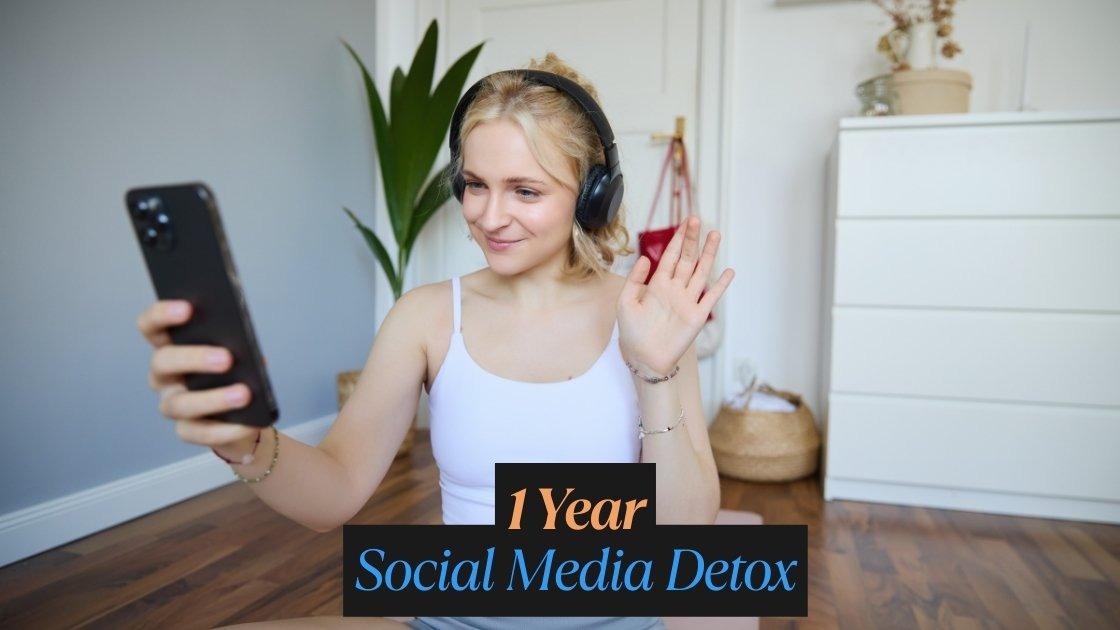
The decision to commit to a 1 year social media detox is one of the most challenging yet profoundly life changing experiments any person can undertake in today’s hyperconnected digital world. With the average adult spending nearly two and a half hours daily scrolling through platforms designed to exploit dopamine responses, the cumulative psychological damage inflicted over months and years has reached epidemic proportions according to leading mental health researchers.
Anxiety disorders, depression symptoms, sleep disruption, and deteriorating self esteem have all been scientifically linked to excessive social media consumption across every age group studied. This psychologist documented analysis examines what actually happens to your brain, relationships, productivity, and emotional wellbeing during a 1 year social media detox backed by neuroscience data and clinical behavioral research.
We will explore digital addiction recovery stages, attention span restoration, mental health improvement timelines, screen time reduction strategies, and real world transformation stories from individuals who completed the full journey. Understanding the documented benefits of a 1 year social media detox empowers you to make an informed decision about reclaiming your mental freedom. This comprehensive guide reveals everything a 1 year social media detox delivers so you can decide whether disconnecting from the digital noise is the breakthrough your psychological wellness desperately needs right now.
The Science Behind Social Media Addiction and Brain Chemistry
Social media platforms are engineered by teams of behavioral psychologists and neuroscientists to create compulsive usage patterns that keep users scrolling far longer than they consciously intend. Every notification, like, comment, and share triggers a small release of dopamine responses in the brain’s reward center, creating a neurological feedback loop nearly identical to the mechanisms observed in gambling and substance addiction research. Understanding this biological foundation explains why a 1 year social media detox requires the same level of commitment and psychological preparation as recovering from any other addictive behavior pattern.
The history of social media addiction research began gaining serious academic attention around 2012 when smartphone penetration exceeded 50 percent globally. Since then, hundreds of peer reviewed studies have documented measurable changes in brain structure among heavy social media users, including reduced gray matter in regions responsible for emotional regulation and impulse control. A 1 year social media detox allows sufficient time for neuroplasticity to reverse many of these structural changes, restoring cognitive functions that shorter breaks cannot meaningfully repair according to longitudinal neuroscience data.
What Happens During the First Three Months
The initial phase of disconnecting from social media presents the steepest psychological challenges that cause most people to abandon their detox attempts prematurely. Understanding what to expect during this critical window dramatically increases your chances of pushing through to the transformational stages that follow.
Withdrawal Symptoms and Emotional Turbulence
The first two to four weeks of a 1 year social media detox typically produce genuine withdrawal symptoms including restlessness, irritability, phantom notification sensations, and an overwhelming urge to check platforms during idle moments. These reactions occur because your brain has become neurologically dependent on the constant dopamine responses that social media algorithms deliver through personalized content feeds. Clinical psychologists compare this adjustment period to the early stages of digital addiction recovery where the brain actively protests the removal of its primary stimulation source.
Boredom as a Gateway to Creativity
By the end of the first month, most participants report experiencing profound boredom that initially feels uncomfortable but gradually transforms into something unexpectedly valuable. Without the constant distraction of scrolling, the brain begins generating original thoughts, creative ideas, and introspective reflections that social media consumption had been silently suppressing for years. Research from the University of Sussex confirms that boredom activates the default mode network responsible for creativity, problem solving, and long term planning. This mental health improvement represents the first tangible reward of sustained disconnection.
Months Four Through Eight and Deepening Transformation
The middle phase of a 1 year social media detox is where the most profound psychological and relational changes become clearly observable to both the individual and the people around them. The initial discomfort has faded and been replaced by increasingly noticeable cognitive improvements.
Attention Span Restoration and Focus Recovery
Between months four and six, participants consistently report dramatic improvements in their ability to concentrate on single tasks for extended periods without feeling compelled to check their phones. Attention span restoration occurs because the brain gradually recalibrates its reward expectations away from the rapid fire micro stimulations that social media delivers every few seconds. Reading entire books, maintaining deep conversations, and completing complex work projects without distraction become noticeably easier. A 1 year social media detox during this phase begins demonstrating productivity gains that many professionals describe as career changing.
Relationship Quality and Emotional Depth
Without social media mediating personal connections, individuals in their 1 year social media detox journey report significantly deeper face to face relationships with family members, close friends, and romantic partners. The superficial engagement of liking posts and leaving brief comments gets replaced by genuine conversations, shared experiences, and emotional vulnerability that digital interaction cannot replicate. Mental health improvement during this phase extends beyond individual wellness into relational wellness that strengthens entire social support networks.
- Sleep quality improves dramatically within the first 90 days as screen time reduction eliminates blue light exposure and stimulating content consumption during evening hours that previously disrupted natural melatonin production cycles
- Self esteem gradually stabilizes as the constant comparison cycle triggered by curated social media highlight reels disappears, allowing individuals to evaluate their lives based on personal values rather than external validation metrics
- Anxiety symptoms decrease measurably between months three and six according to clinical psychology research tracking cortisol levels in participants completing extended digital addiction recovery programs
- Productivity increases by an average of 25 to 35 percent as attention span restoration allows sustained deep work sessions that fragmented social media checking patterns had previously made neurologically impossible
- Physical activity levels rise naturally as the hours previously consumed by scrolling get redirected toward outdoor activities, exercise routines, and hobby development that improve both physical and psychological wellbeing

Months Nine Through Twelve and Permanent Rewiring
The final quarter of a 1 year social media detox solidifies every neurological and psychological change that developed during the preceding months into permanent behavioral patterns. The brain has fully adapted to functioning without constant digital stimulation, and the thought of returning to previous usage levels often feels genuinely unappealing to most participants who reach this stage.
Identity Reconstruction Beyond Digital Validation
During the final months, individuals frequently report a fundamental shift in how they define personal identity and self worth. Without followers, likes, and engagement metrics providing external validation, people develop internally anchored confidence that does not fluctuate based on algorithmic visibility or public approval. This mental health improvement represents perhaps the most valuable outcome of the entire journey because it creates psychological resilience that persists long after the detox period ends.
Deciding Whether to Return or Stay Disconnected
A 1 year social media detox does not necessarily mean permanent abandonment of all platforms. Many participants choose to return with radically different usage patterns, implementing strict screen time reduction boundaries and curating their feeds to eliminate comparison triggers and negativity. Others discover that life without social media feels so significantly better that they choose permanent disconnection. Either outcome represents a conscious empowered choice rather than the unconscious compulsive behavior that characterized their previous relationship with these platforms.
Challenges and Realistic Expectations
Committing to a 1 year social media detox is not without genuine difficulties that deserve honest acknowledgment. Professional networking opportunities through LinkedIn may require alternative strategies. Staying informed about community events and social gatherings demands more intentional effort. Some friendships maintained exclusively through digital interaction may weaken during the detox period.
However, clinical research consistently shows that the psychological benefits of completing a full 1 year social media detox far outweigh these temporary inconveniences. The digital addiction recovery process teaches coping mechanisms, emotional regulation skills, and attention span restoration techniques that serve individuals for the rest of their lives regardless of whether they eventually reintroduce limited platform usage. The key is approaching the journey with realistic expectations, professional support when needed, and the understanding that discomfort during the early months is a temporary neurological adjustment rather than a permanent state of deprivation
Conclusion
This psychologist documented analysis confirms that a 1 year social media detox produces measurable neurological, psychological, and relational transformations that shorter breaks simply cannot achieve. From the challenging withdrawal phase and digital addiction recovery during the initial months to profound attention span restoration and mental health improvement emerging between months four and eight, every stage delivers compounding benefits that permanently reshape how your brain processes information and emotional stimulation.
The final quarter solidifies these changes into lasting behavioral patterns supported by genuine neuroplasticity rather than temporary willpower alone. Sleep quality improvements, screen time reduction habits, stabilized self esteem, decreased anxiety symptoms, and deeper personal relationships represent just a fraction of the documented outcomes awaiting those who commit fully.
A 1 year social media detox demands patience and realistic expectations, but the scientific evidence overwhelmingly proves that reclaiming twelve months from algorithmic manipulation delivers life changing results. Whether you ultimately return with healthier boundaries or choose permanent disconnection, completing this journey gives you conscious control over your digital life rather than surrendering it to platforms engineered to exploit your dopamine responses indefinitely.