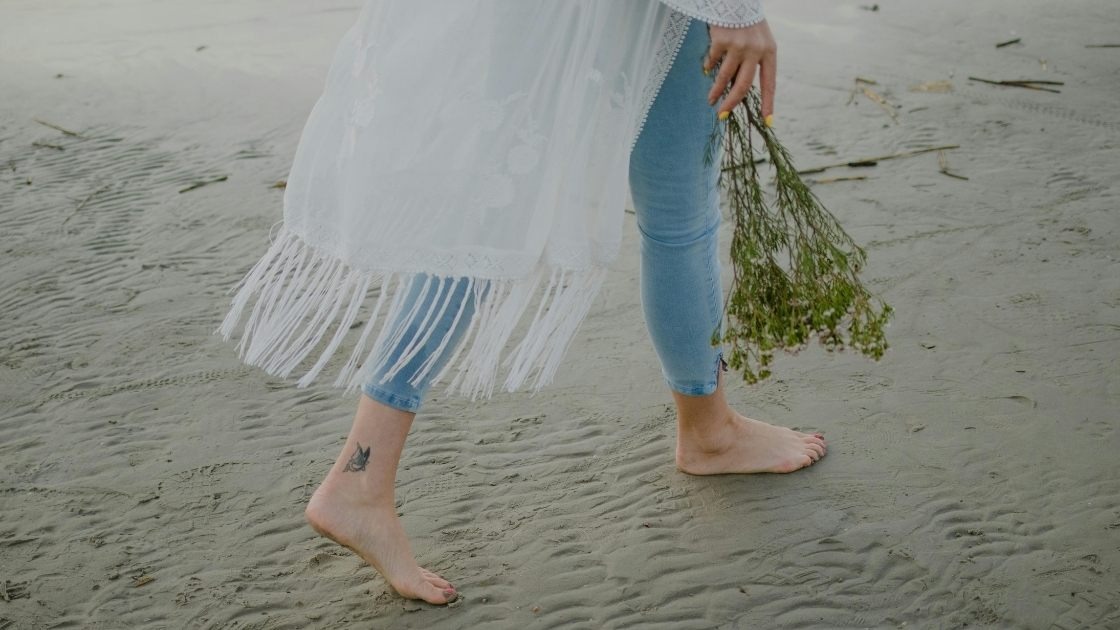
Barefoot walking benefits have moved from fringe wellness advice into peer-reviewed research, yet most people still spend their days locked inside cushioned shoes that numb the feet and dull the nervous system. Weak arches, poor balance, rising cortisol, and nagging knee pain often follow. The fix is simpler than any supplement or gadget: let your feet touch the ground again. This guide unpacks what the science actually shows, with clear steps to start safely.
Table of Contents
What Happens When You Walk Without Shoes
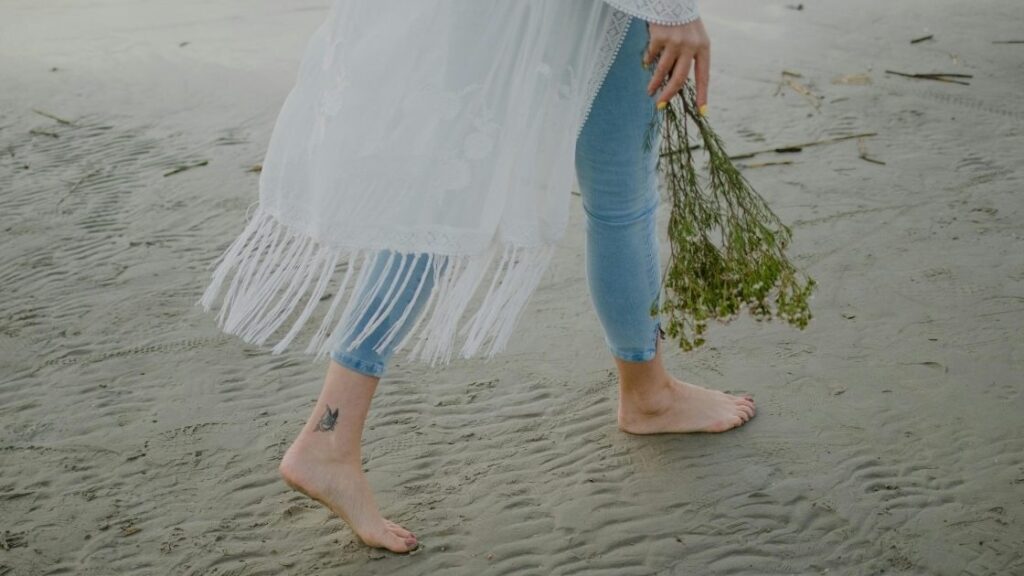
Going shoeless, sometimes called grounding or earthing, removes the thick padding between your feet and the earth. Your toes spread, your arches engage, and roughly 200,000 nerve endings per foot start feeding real sensory data to your brain again. This is the foundation of every barefoot walking benefit you will read about below.
Modern cushioned shoes do plenty of work your foot muscles were designed to handle. Over years, that outsourcing weakens the intrinsic foot muscles, flattens arches, and narrows stride mechanics. Barefoot walking reverses the pattern by turning each step into a small strength session for your feet, ankles, and calves.
A Quick History of Shoeless Movement
For more than 99% of human history, people walked and hunted on bare feet or in thin hide sandals. The cushioned running shoe we know today only became mainstream in the 1970s. Evolution shaped the human foot around direct ground contact, not foam, so it is worth taking seriously what your body actually expects from movement.
9 Science-Backed Barefoot Walking Benefits
These are the benefits of walking barefoot consistently reported across clinical research and sports medicine:
- Stronger intrinsic foot muscles and higher arches
- Better balance and proprioception
- Healthier gait and reduced joint stress
- Improved posture and spinal alignment
- Lower cortisol and a calmer nervous system
- Enhanced circulation in the feet and lower legs
- Sharper cognitive function and focus
- Fewer common foot problems like bunions and plantar fasciitis
- Better sleep quality and mood stability
Each benefit has a specific mechanism. Let us walk through the most important ones.
Stronger Feet and Better Posture from the Ground Up
When you wear supportive shoes, the sole does the stabilizing work your foot should do. Kick them off and the small muscles under your arch light up. A 2015 systematic review by Franklin and colleagues, published in The Foot and cited by Healthline, found that barefoot walking changes muscle activation and gait mechanics in ways that strengthen the foot over time.
Healthier foot mechanics ripple upward. According to Healthline’s medically reviewed guide on walking barefoot, better foot control leads to better mechanics at the hips, knees, and core, and can relieve pain caused by badly fitting footwear. In other words, the fix for your lower back might actually start at your heels.
Posture improves too. Elevated heels push your pelvis forward and flatten your lumbar curve. Going shoeless, or switching to minimalist footwear, lets your spine return to its natural S shape, which supports even weight distribution through the ankles, knees, and hips. Strong feet are the quiet foundation under almost every good movement habit you care about, from carrying groceries to marathon training.
Proprioception, Balance, and Fewer Falls
Proprioception is your body’s sense of where it is in space. Thick soles blunt this sense by isolating your feet from ground textures, temperatures, and tiny shifts underfoot. Walking barefoot feeds that information stream back into your nervous system.
This matters at every age. Harvard Health Publishing notes that balance relies on inner-ear input, vision, and the somatosensory system, which includes “the feeling of the ground beneath your feet,” according to Dr. Brad Manor of Harvard Medical School’s Mobility and Falls Program. When that sensory channel is starved, fall risk rises. The UCSB Student Health and Wellness Center also reports that people who walk barefoot outdoors show higher psychological restoration and nature connectedness than shoe wearers.
Short daily barefoot sessions train the ankles, hips, and trunk to make the micro-corrections that keep you upright when the sidewalk tilts or the floor shifts.
Cognitive Benefits: Can Going Shoeless Sharpen Your Brain?
Here is the angle most ranking pages skip entirely. Barefoot walking is not only a foot story; it may also be a brain story.
A 2024 controlled study published in the Journal of Exercise Rehabilitation, led by researchers at Keimyung University and approved by the Keimyung University Bioethics Committee, split 59 adolescents into barefoot, sneaker, and control groups and tracked EEG activity across a 12-week walking program. According to the published findings, the barefoot group showed significant increases in sensorimotor rhythm and alpha brain waves, gains in cognitive speed and concentration, and a measurable drop in brain-stress markers. The sneaker group showed few of those changes.
Researchers link these results to the richer sensory stimulation the foot receives on varied ground. Every pebble, blade of grass, and temperature shift triggers multisensory processing that the brain must integrate in real time. Over weeks, that repeated challenge appears to support attention, sensory integration, and executive function, similar to the way balance training sharpens older adults’ cognition.
The takeaway is practical for students, desk workers, and anyone rebuilding focus after long hours of screen time. A barefoot walk on grass is a surprisingly cheap cognitive tune-up.
Grounding, Cortisol, and Nervous-System Recovery
Grounding enthusiasts argue that skin-to-earth contact neutralizes free radicals and calms the body. The science on direct electron transfer is still early, but the stress-reduction half of the claim has stronger legs.
Walking itself lowers stress hormones. A 2022 study in Molecular Psychiatry by Sudimac and colleagues, using functional MRI in 63 adults, found that amygdala activity dropped after a one-hour nature walk while remaining unchanged after an urban walk. Less amygdala reactivity translates into a quieter fight-or-flight response and lower perceived stress. Going barefoot layers in tactile richness that can deepen this effect, which is why many people describe a barefoot beach or park walk as a nervous-system reset.
If chronic stress is weighing on you, the deeper neurobiology is covered in our guides on walking for anxiety relief and does walking reduce stress. Pair those principles with five to ten grounded minutes on grass, and you have one of the most accessible stress-management tools in the Mind and Body category.
Best Surfaces for Barefoot Walking: A Quick Comparison
Not every surface is equal, and choosing the right one is the difference between a restorative habit and a minor injury. Here is how common surfaces stack up.
| Surface | Primary Benefit | Risk Level | Best For |
| Clean grass (lawn, park) | Gentle proprioceptive input, cooling effect | Low | Beginners, daily practice |
| Damp beach sand | High muscular engagement, natural exfoliation | Low | Foot strengthening, runners |
| Forest floor or dirt trail | Rich sensory variety, grounding effect | Medium | Intermediate walkers, stress relief |
| Indoor tile or wood | Safe, controlled, easy to start | Very low | Cold months, diabetics, first timers |
| Concrete sidewalk | Minimal cushion, uniform feedback | Medium to high | Short bursts only, not beginners |
| Rocky or rough terrain | Maximum reflex and nerve training | High | Advanced feet, short sessions only |
A 2023 explainer from Soft Star Shoes, citing sports-science research, notes that walking in dry sand can require roughly 2.1 to 2.7 times more energy than walking on hard surfaces. That explains why a barefoot beach walk lights up muscles from your arches to your glutes.
How to Transition to Barefoot Walking Safely
Your feet have spent decades inside protective shoes, so a sudden switch is a quick path to shin splints or plantar fasciitis. Ease in.
Start indoors for five to ten minutes a day on a clean floor. Add outdoor sessions on grass or packed sand once the soles adapt, and keep early walks short. Healthline’s clinical review recommends initial sessions of about 15 to 20 minutes and warns that jumping straight into barefoot running or hiking before building tolerance sharply raises injury risk.
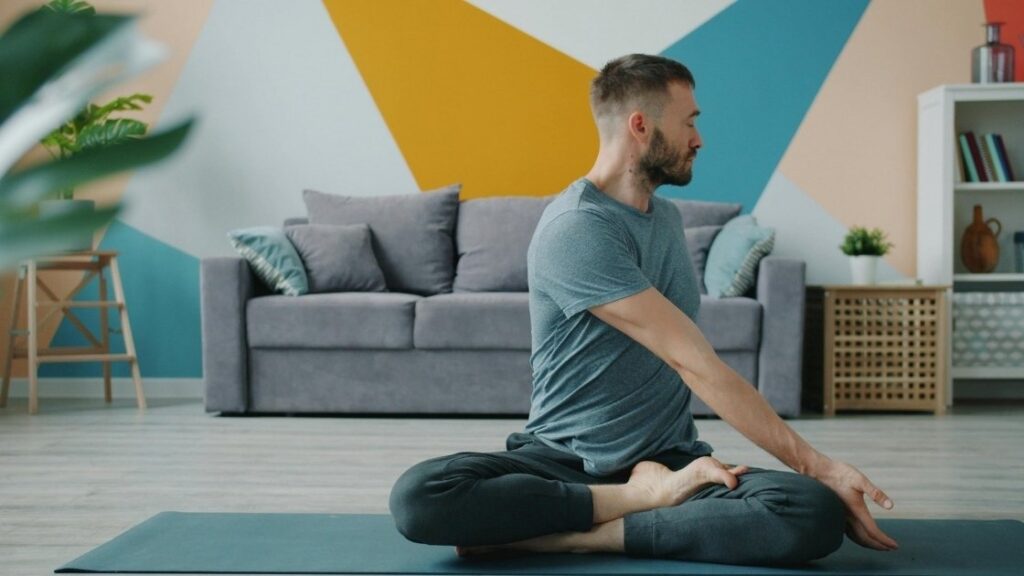
Consider minimalist or barefoot-style shoes as a middle step. They keep the toe box wide and the sole thin while still shielding you from glass, thorns, and extreme temperatures. After a few weeks, examine your feet each evening for small cuts or blisters, especially if you have any loss of sensation. Mix in simple balance work: standing on one foot while brushing your teeth, slow heel raises, or a short barefoot yoga flow. Track how your feet feel, not just how many steps you log, and push only as fast as soreness resolves between sessions.
For a structured routine, our workout plans and health tools pair well with a gradual barefoot-walking ramp.
Who Should Avoid Walking Barefoot?
Barefoot walking is not universal advice. Healthline’s clinical review, citing Dr. Christopher Dietz of MedExpress, warns that people with diabetes should consult their doctor before going shoeless, because peripheral neuropathy can mask wounds on the bottom of the foot until they become serious.
Other caution groups include people with active foot ulcers, severe plantar fasciitis, advanced osteoarthritis, or immune-suppressing conditions that raise infection risk from cuts and fungi. Pregnant women navigating a shifting center of balance and older adults who have fallen recently should keep initial sessions indoors on predictable surfaces.
If you are uncertain, check with a podiatrist and lean on the HealthBays symptom guides to match practices to your current health.
Conclusion
Barefoot walking benefits are not a trend. They track back to how your body was designed to move, and modern research keeps confirming what our ancestors took for granted. Stronger feet, sharper proprioception, a calmer nervous system, and, according to recent EEG work from Keimyung University, even a more focused brain.
Start slow, pick clean surfaces, and treat your feet the way you would treat any other muscle group you are rebuilding. The payoff shows up in your posture, your balance, your sleep, and often in your mood within weeks.
If this helped, try ten minutes on grass tomorrow morning and tell us in the comments what you noticed. Share this guide with a friend whose feet have been stuck in shoes all day.
How long should I walk barefoot each day to see benefits?
Most experts suggest 15 to 20 minutes of barefoot walking daily as a safe starting point. This duration gives foot muscles, tendons, and ligaments time to adapt without overloading tissues that are used to constant shoe support. Healthline’s clinical guide recommends gradually building from there once soreness resolves between sessions.
Is walking barefoot on concrete bad for you?
Concrete is harder than natural surfaces and offers no cushioning, so short bursts are fine but long daily walks on pavement can stress heels and arches before the foot is ready. Prioritize grass, sand, or dirt trails first. Save sidewalks for quick errands rather than your primary training surface.
Can barefoot walking help with plantar fasciitis?
Many people with mild plantar fasciitis report improvement after they strengthen the intrinsic foot muscles that cushioned shoes tend to weaken. Results vary. If you have active, severe heel pain, consult a podiatrist first, and consider transitioning through minimalist footwear before fully going barefoot.
Does grounding or earthing really lower stress?
Walking outdoors does measurably reduce stress. A 2022 Molecular Psychiatry study by Sudimac and colleagues showed a one-hour nature walk lowered amygdala activity on fMRI. Direct skin-to-earth contact may add tactile richness that deepens the calming effect, although the pure electron-transfer theory behind grounding is still under investigation.
Is it safe to walk barefoot if I have diabetes?
Diabetes with peripheral neuropathy raises serious risks because cuts, blisters, and burns on the feet can go unnoticed until they become infected. Always consult your primary care doctor before walking barefoot. Many diabetics do better with well-fitted minimalist shoes that protect the skin while still allowing natural foot movement.
What is the best surface for beginners?
Soft, clean grass in a familiar yard or park is the best starting surface for most people. It offers gentle sensory stimulation, natural cushioning, and a low risk of cuts. Indoor tile or wood is an equally good option during cold months or when outdoor conditions are unsafe.