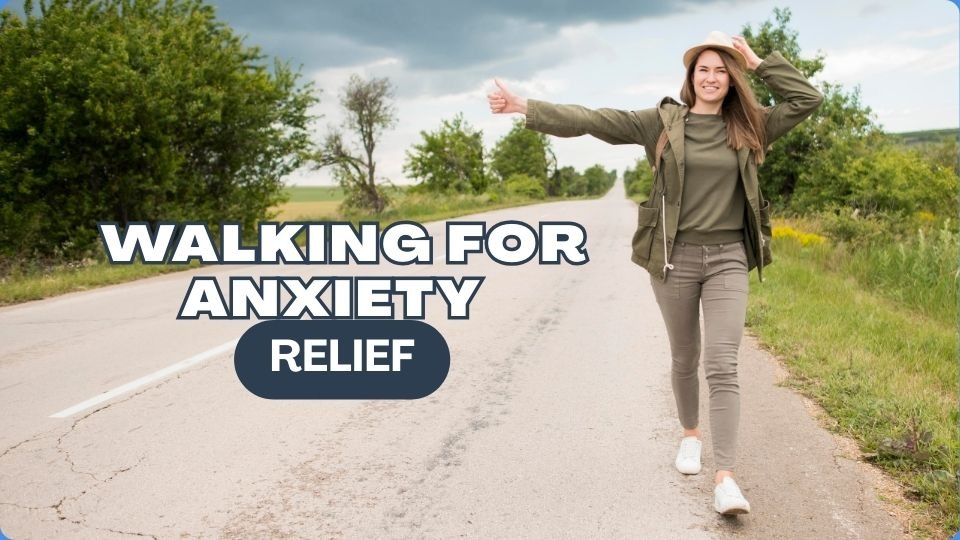
The concept of walking for anxiety relief extends far beyond a simple recommendation to move your body when you feel overwhelmed or mentally exhausted. Walking activates intricate neurobiological mechanisms that directly modulate the brain regions and neurotransmitter systems responsible for generating anxious thoughts, hypervigilant behavior, and emotional dysregulation at a fundamental cellular level. What appears to be a basic physical activity actually operates as a sophisticated neural intervention.
This article examines walking for anxiety relief through the lens of amygdala downregulation and GABAergic neurotransmission, two critical systems that govern how your brain processes perceived threats and maintains emotional equilibrium. You will explore how serotonergic pathway activation during locomotion interacts with prefrontal cortex functioning and how autonomic nervous system recalibration contributes to measurable reductions in generalized anxiety symptoms over sustained practice periods.
Whether you are a clinical practitioner, a psychology researcher, or someone seeking evidence based natural interventions, understanding walking for anxiety relief at this neurobiological depth will fundamentally shift your approach. By the end, walking for anxiety relief will feel less like casual advice and more like a precision guided neuroscientific strategy for lasting psychological resilience.
How Walking Activates the Brain’s Anxiety Regulation Systems
Understanding walking for anxiety relief requires examining the precise neurological events that unfold when your body transitions from a sedentary state into rhythmic bilateral locomotion. The moment you begin walking, proprioceptive signals from your lower limbs travel through the dorsal column medial lemniscus pathway to the somatosensory cortex, initiating a chain of neural activations that directly influence emotional processing centers deep within the limbic system.
Walking generates a repetitive alternating movement pattern that produces bilateral sensory stimulation across both cerebral hemispheres. This cross lateral activation shares mechanistic similarities with eye movement desensitization and reprocessing therapy, a clinical intervention widely used for processing anxiety related traumatic memories and reducing emotional hyperarousal in patients with generalized anxiety disorder.
The relationship between ambulatory movement and anxiety regulation has been investigated across multiple clinical disciplines including behavioral neuroscience, psychiatric rehabilitation, and exercise psychophysiology. Each field contributes distinct evidence explaining why walking for anxiety relief continues to gain recognition as a legitimate neurobiological intervention rather than a superficial wellness recommendation.
Historical Evolution of Walking as an Anxiolytic Practice
The therapeutic application of walking for anxiety management has deep historical roots spanning multiple civilizations and philosophical traditions. Stoic philosophers in ancient Rome prescribed daily walking routines as a method for cultivating mental tranquility and strengthening rational emotional governance during periods of psychological adversity.
In Japanese culture, the practice of shinrin yoku or forest bathing emerged as a structured walking based intervention specifically designed to reduce cortisol levels and restore autonomic nervous system balance. Modern psychiatric research began formally studying walking for anxiety relief during the 1980s when exercise intervention trials demonstrated statistically significant reductions in state anxiety scores among clinical populations compared to sedentary control groups.
Amygdala Downregulation Through Rhythmic Locomotion
The amygdala serves as the brain’s primary threat detection center, and its hyperactivation represents one of the core neurological features of chronic anxiety disorders. Research examining walking for anxiety relief has revealed that sustained moderate intensity walking reduces amygdala reactivity to emotionally threatening stimuli through a process known as top down prefrontal inhibition.
During walking, increased blood flow reaches the ventromedial prefrontal cortex, which sends inhibitory projections to the amygdala through the uncinate fasciculus neural tract. This enhanced prefrontal amygdala connectivity allows the rational brain to exert greater regulatory control over fear based emotional responses, effectively recalibrating your threat perception threshold downward with each walking session.
The Default Mode Network and Rumination Disruption
Chronic anxiety is closely associated with hyperactivity in the default mode network, a collection of brain regions that become most active during self referential thinking and repetitive worry cycles. Walking for anxiety relief disrupts default mode network dominance by shifting neural resources toward the task positive network, which governs externally focused attention and sensory engagement.
This attentional shift interrupts the perseverative rumination loops that fuel anticipatory anxiety and catastrophic thinking patterns. The rhythmic sensory input generated during walking including visual flow, proprioceptive feedback, and auditory environmental processing collectively anchors the brain in present moment awareness, creating a natural mindfulness state that competes with anxious cognitive patterns.
GABAergic Neurotransmission and Inhibitory Tone Enhancement
Gamma aminobutyric acid functions as the brain’s primary inhibitory neurotransmitter and plays a critical role in maintaining the excitatory inhibitory balance that prevents neuronal hyperexcitability. Deficits in GABAergic signaling have been consistently identified as a neurochemical hallmark of generalized anxiety disorder, panic disorder, and social anxiety conditions.
Research investigating walking for anxiety relief has demonstrated that moderate aerobic walking increases GABAergic tone in the central nervous system through enhanced expression of glutamic acid decarboxylase, the enzyme responsible for synthesizing gamma aminobutyric acid from glutamate. This enzymatic upregulation produces a natural anxiolytic effect that mirrors the pharmacological mechanism of benzodiazepine medications without the associated dependency risks.
Serotonergic Pathway Activation During Walking
Walking for anxiety relief also activates the dorsal raphe nucleus, which serves as the primary source of serotonin production in the brain. Sustained rhythmic movement increases tryptophan availability across the blood brain barrier, providing the essential amino acid precursor required for serotonin biosynthesis within the central nervous system.
Enhanced serotonergic transmission during walking modulates emotional reactivity, improves stress tolerance capacity, and supports the maintenance of stable mood states. This neurochemical pathway overlap with selective serotonin reuptake inhibitor mechanisms explains why clinical studies frequently report comparable anxiety reduction outcomes between regular walking interventions and first line pharmacological treatments in mild to moderate anxiety populations.
Evidence Based Outcomes Documented in Clinical Research
The peer reviewed literature examining walking for anxiety relief has produced consistent findings across randomized controlled trials, meta analyses, and longitudinal population studies that document specific measurable neurobiological and psychological outcomes.
- Reduced amygdala blood oxygen level dependent signal intensity measured through functional magnetic resonance imaging following 8 week structured walking programs in participants with generalized anxiety disorder
- Increased plasma gamma aminobutyric acid concentrations detected at 30 and 60 minute post walking intervals indicating enhanced central inhibitory neurotransmission
- Decreased default mode network functional connectivity associated with reduced self referential rumination and perseverative worry patterns in longitudinal neuroimaging studies
- Improved prefrontal cortex mediated cognitive reappraisal capacity measured through emotional regulation task performance following consistent walking interventions
- Enhanced parasympathetic vagal tone reflected through increased heart rate variability scores in participants who maintained walking routines across 12 week clinical observation periods

Challenges and Clinical Considerations
Despite the compelling neurobiological evidence supporting walking for anxiety several important limitations require thoughtful consideration before relying on walking as a primary anxiolytic intervention. Individuals experiencing severe panic disorder with agoraphobic avoidance may find outdoor walking initially counterproductive if environmental exposure triggers acute anxiety episodes without adequate therapeutic support.
The dose response relationship between walking and anxiety reduction also varies considerably across individuals based on genetic polymorphisms in serotonin transporter genes, baseline GABAergic tone, and prior exercise history. What produces significant relief for one person may require substantially different parameters for another.
Personalizing Walking Protocols for Optimal Anxiolytic Outcomes
Clinical evidence suggests that walking for anxiety relief achieves maximum neurobiological benefit when sessions last between 30 to 45 minutes at a pace that elevates heart rate to approximately 50 to 70 percent of maximum capacity. Natural environments with green spaces and reduced urban sensory stimulation amplify the cortisol reduction and default mode network disruption effects significantly.
Consistency of practice outweighs individual session intensity in producing lasting neuroplastic adaptations. Researchers recommend five weekly sessions as the minimum threshold for achieving sustained amygdala downregulation and meaningful GABAergic tone enhancement over clinically relevant timeframes.
Why Walking for Anxiety Relief Reshapes Modern Mental Health Strategy
The growing neurobiological understanding of walking for relief carries profound implications for how mental health professionals approach anxiety management across clinical and community settings. As pharmacological treatments face increasing scrutiny regarding long term dependency risks and side effect profiles, accessible movement based interventions offer a complementary pathway grounded in rigorous neuroscientific evidence.
Walking for anxiety represents more than personal wellness advice. It constitutes a scalable public health intervention capable of modulating the same neurochemical systems targeted by first line psychiatric medications. Understanding this practice at the level of amygdala downregulation, GABAergic enhancement, and serotonergic pathway activation empowers both clinicians and individuals to integrate walking into comprehensive anxiety management frameworks that produce lasting neurobiological transformation.
Conclusion
The neurobiological evidence supporting walking for anxiety relief confirms that this accessible practice operates through precisely the same brain systems targeted by conventional psychiatric interventions. From amygdala downregulation through enhanced prefrontal inhibitory control to increased GABAergic neurotransmission that restores excitatory inhibitory balance, every walking session produces measurable changes within your central nervous system architecture.
Serotonergic pathway activation, default mode network disruption, and parasympathetic vagal tone enhancement work collectively to reduce rumination, lower cortisol concentrations, and strengthen emotional regulation capacity over sustained practice periods. These neuroplastic adaptations accumulate progressively, building a fundamentally more resilient anxiety response system.
Understanding walking for anxiety relief at this advanced neurobiological level transforms a commonly overlooked daily activity into a deliberate clinical grade intervention. Whether integrated alongside psychotherapy, pharmacological treatment, or practiced independently as a preventive strategy, walking for anxiety relief remains one of the most scientifically validated and universally accessible tools for achieving lasting psychological equilibrium and emotional resilience.